
Customs Kee Group
We would insert an introductory sentence that announces the "topic".
Introduction to theDPRK
Korean customs have been developed throughout the 5,000 years of Korea’s history. Traditional life customs and manners are described as having been formed from the course of battling invasions.
Korean customs were regained after the liberation of Korea from Japanese occupation and were developed combining both the ideals socialism and nationalism. Korean customs are classified into the following topics: traditional clothing, diet, family life, communal life and holidays.
National Emblem
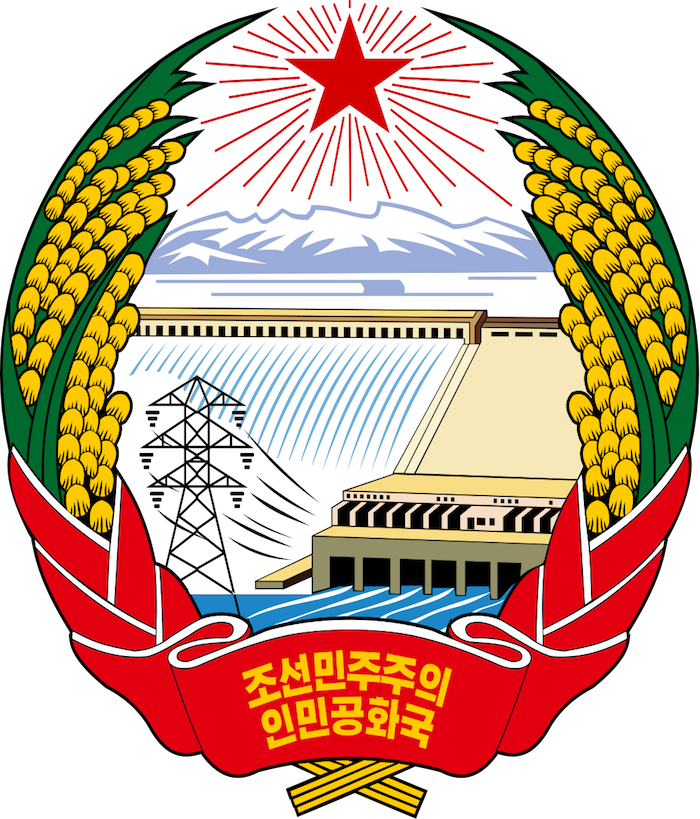
Established on the founding of the DPRK and designed by Kim II Sung, the national emblem represents the significant elements of DPRK. Click the emblem below to learn more.
Ears of rice reflect the DPRK’s socialist rural economy
Mt. Paektu, the mountain of the Korean revolution, symbolises the Juche idea founded by Kim II Sung
A hydroelectric power station reflects the heavy industry of Korea and the working class of the State.
Democratic People’s Republic of Korea is inscribed on this red ribbon in order to demonstrate the independent, democratic and people’s state.
The oval frame represents the unity of the people around the ruling party — the Worker’s Party of Korea.
- The red star signifies the struggles of the Korean people striving to build a socialist nation and the independent and peaceful reunification of Korea, along with the accomplishment of the Juche revolution.
- The mountain peaks refer to the mountain of Korean revolution, Mt. Paektu, which symbolises the Juche idea founded by Kim II Sung and the traditions formed during the revolution against the Japanese occupation.
- The ears of rice reflect the socialist rural economy and cooperative farmers.
- The hydroelectric power station reflects the heavy industry of Korea and the working class of the State.
- The oval frame represents the unity of the people around the ruling party — the Worker’s Party of Korea.
- Democratic People’s Republic of Korea is inscribed on the red ribbon to demonstrate the independent, democratic and people’s state.
National Flag
The national flag was also established upon the founding of DPRK and designed by Kim II Sung. Click the flag below to learn more.
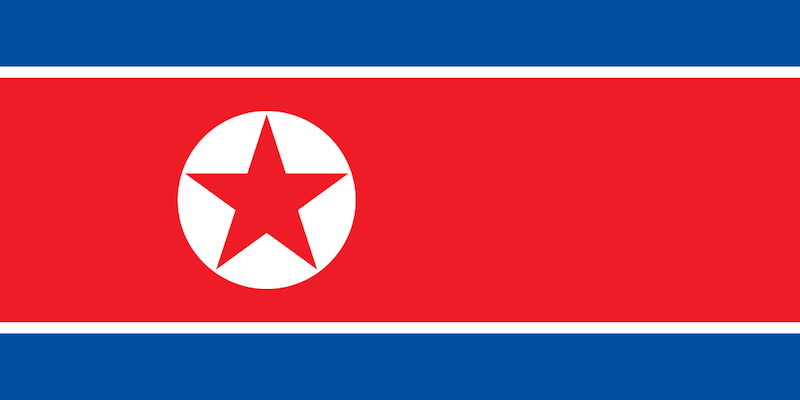
The blue colour represents the revolutionary spirit of the Korean people and the sovereignty of the DPRK.
The five-point star depicts the spirit of the Korean people carrying forward the revolutionary traditions against the Japanese occupation.
Red symbolises the blood of the Koreans who fought in the liberation of Korea and the unity of the Korean people.
The white colour implies the homogeneous nation — those who share one bloodline, language and culture.
- The blue colour represents the revolutionary spirit of the Korean people and the sovereignty of the DPRK.
- The white colour implies the homogeneous nation — those who share one bloodline, language and culture.
- The red colour symbolises the red blood of the Koreans who fought in the liberation of Korea and the unity of the Korean people standing behind the DPRK.
- The five-point star depicts the spirit of the Korean people carrying forward the revolutionary traditions in the revolution against the Japanese occupation and the prospect of the DPRK.
Capital
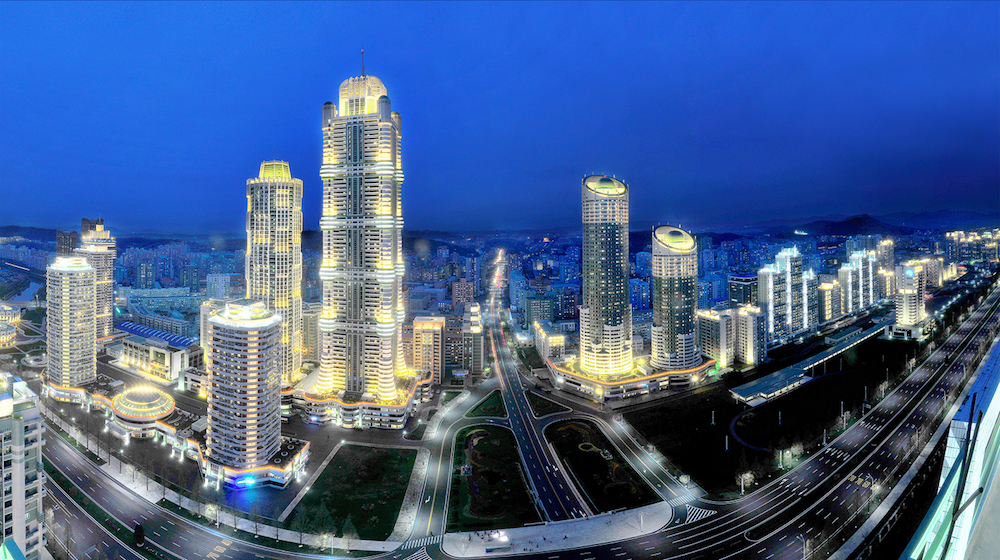
Pyongyang, as the capital of the DPRK, is the centre of the country’s politics, economy and culture, as well as a central hub for tourism. The capital is in the middle lowlands of the north-west Korean peninsula. The name Pyongyang refers to flatlands.